There’s a reason ‘how to clean a couch’ ranks among the most searched-for cleaning questions on the internet. Because in your home, and everyone else’s too, the couch is command central – the place you collapse after work, eat dinner on a Tuesday, binge 5 episodes of something on Netflix you’ll deny ever watching, and wake up at 2 am with the remote on your face.
But that’s not all! It’s also where the dog sleeps when you’re not looking, where the cat has made some very questionable decisions, and where your kids have left evidence of every snack they’ve ever consumed. It collects all of this quietly and without complaint, which is the least it can do given how much it sees.
At some point though, the smell arrives. Or the stain. Or both. And you’d like to deal with it without calling anyone just yet.
Fair enough. Here’s how to do it properly.
Before you start: Know what you’re working with
The biggest mistake people make with couch cleaning is reaching for the nearest product without checking the fabric care label first.
Most people are completely unaware that pretty much every couch has a cleaning code tucked away under a cushion or on the base:
W – Water-based cleaners safe
S – Solvent-based cleaners only, no water
WS – Either is fine
X – Vacuum only, no liquid cleaners at all.
So before doing anything else, rush to your couch right now and have a look for it. Because simply applying water to an S-coded couch, or using the wrong solvent on a fabric that can’t handle it, can cause permanent damage that no amount of effort will ever fix.
Apart from that, let’s get started:
Step 1: Start dry
Whatever the problem, always start dry.
Remove all cushions and vacuum the entire couch thoroughly – base, back, sides, crevices, and under the cushions where crumbs, hair, and things you’d rather not identify tend to gather. And use the upholstery attachment if you have one.
This step alone makes a noticeable difference and prepares the surface properly for anything that follows.
How to clean a fabric couch? A lint roller or rubber glove dragged across the surface pulls pet hair out of the weave more effectively than a vacuum alone. Do this before any wet cleaning or you’ll end up pressing hair further into the fabric.
Step 2: Tackle general fabric stains
For everyday stains on a fabric couch – food, drink, general mystery marks – mix a small amount of dish soap with warm water and apply with a clean cloth using a blotting motion.
And the big tip here? Never rub. Because it just spreads the stain and pushes it deeper into the fibres. Blot from the outside of the stain inward, working toward the centre. Rinse the cloth frequently and repeat until the stain lifts.
For tougher marks, a solution of equal parts white vinegar and water works well on most fabric types and is safe for W and WS-coded couches:
- Apply
- Blot
- Allow to air dry fully before sitting on it again.
Step 3: Leather needs a different approach
Knowing how to clean a leather couch properly means resisting the urge to use the same products you’d use on fabric.
Water and leather have a complicated relationship – too much moisture causes cracking and warping over time. For routine cleaning, a slightly damp microfibre cloth removes surface dust and light marks without saturating the leather.
For deeper cleaning, a dedicated leather cleaner applied with a soft cloth in gentle circular motions is the right call. Follow with a leather conditioner to restore suppleness and prevent cracking – this step gets skipped constantly and shouldn’t be.
Avoid:
- Baby wipes
- Household sprays
- Anything with alcohol or bleach.
Why? They’ll clean it once and damage it forever.
Step 4: The cat pee situation
If you’re trying to work out how to clean cat pee off a couch, the most important thing to know is that speed matters. Enormously. Because fresh urine is far easier to deal with than dried. And because that awful cat pee smell is so notoriously difficult to get rid of, there are quite a few steps here to carefully understand:
- Blot up as much as possible immediately
- Don’t rub!
- Apply a solution of equal parts white vinegar and water generously to the affected area
- Allow it to sit for 5-10 minutes
- Blot again
- Apply a generous layer of baking soda over the damp area
- Leave it for several hours or overnight
- Vacuum the baking soda off once fully dry.
The vinegar neutralises the ammonia in the urine. The baking soda absorbs residual moisture and odour.
And for dried urine or repeat offenders, an enzymatic cleaner – available from pet stores – is the most effective option because it breaks down the proteins that cause the smell rather than just masking them.
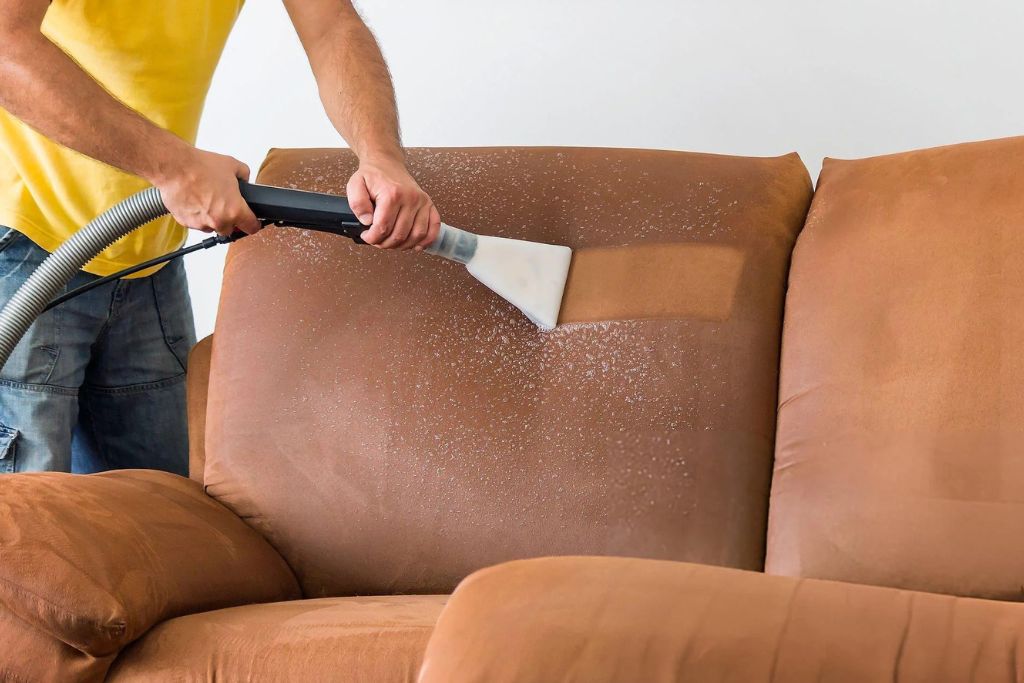
Step 5: Steam cleaning at home
Learning how to steam clean a couch at home is genuinely useful if you own or can hire a handheld steam cleaner. Why?
Because steam:
- Kills bacteria
- Lifts embedded dirt
- Deodorises fabric without any chemicals.
It’s particularly effective on fabric couches with a W or WS code – check first, as steam can damage certain delicate fabrics and should never be used on leather.
Work in slow, overlapping passes and keep the steamer moving to avoid saturating any single area. Allow the couch to dry completely – ideally with windows open or a fan running – before use.
Step 6: The deep clean
Knowing how to deep clean a couch at home means combining all of the above in one session:
- Vacuum
- Spot treat any stains
- Steam clean the full surface
- Deodorise with baking soda left on for several hours
- Vacuum again.
Yes it takes time, but done thoroughly it can restore a couch that looks and smells significantly worse than it is. The results tend to be good but not quite the same as professional cleaning – which is worth understanding before you begin.
What the professionals can do that you can’t
DIY couch cleaning at home can handle a lot. But what it doesn’t do is extract the deep-seated dirt, bacteria, allergens, and moisture that have worked their way into the padding and base of the couch over months and years.
The good news? The typical professional couch and upholstery cleaning cost is often less than people expect – and the results are noticeably different to what a home clean produces. Hot water extraction, professional-grade enzymatic treatments, and proper drying equipment get into places no home method can reach.
Has your couch been through a lot? GMA Cleaning Solutions‘ upholstery cleaning service is well worth a look.
Get in touch for an instant quote today.
Related posts:
 A Super-Simple 2-Step Guide For Removing Ceiling Mould
 How To Clean Walls: A Simple Guide For A Spotless Surface
 How To Clean Shower Glass Doors: An Impossible Task Made Simple
 How To Clean A Bathroom Fast And Efficiently
 How To Clean Windows: 9 Tips Every Homeowner Should Know
 How To Clean Chrome Surfaces Without Scratching Or Streaks